 HefferApps
 ← Food Diary: Symptom Tracker
If you think something you eat is behind your bloating, stomach cramps or headaches, a food and symptom diary is the place to start. It’s also what a GP or dietitian is likely to ask for: the NHS says you may be asked to keep one to help find possible triggers.
This guide covers what to write down, how long to keep going, how to spot a pattern and what to do before you cut anything out. It sums up advice from the NHS and the British Dietetic Association, and it isn’t medical advice. If your symptoms worry you, speak to your GP or doctor.
What a food and symptom diary is for
A food and symptom diary is a record of everything you eat and drink, kept side by side with how you feel. One bad evening doesn’t tell you much. A few weeks of meals and symptoms in one place can show a pattern: the same food, followed by the same symptom, after about the same delay.
It helps if you have IBS: the NHS suggests keeping a diary of what you eat and any symptoms you get, so you can avoid the things that trigger it. It helps if you suspect a food intolerance, too. If you think you have a food allergy, a diary can help your GP, but it isn’t a test. Allergies are diagnosed with tests such as skin-prick and blood tests, usually by a specialist.
A diary can’t diagnose anything. What it gives you is evidence to take to an appointment, instead of trying to remember what you ate last Tuesday.
Intolerance or allergy?
They’re different things. A food intolerance isn’t caused by the immune system, and it can’t cause a serious allergic reaction. Its symptoms, such as diarrhoea, bloating, wind and tummy pain, usually start a few hours after eating and can last for hours or days. An allergy is caused by the immune system. Its symptoms can start straight after eating or days later, and a reaction can be serious.
If your throat feels tight or you’re struggling to swallow after eating, call 999 (911 in the US).
What to write down
Write each entry as you go, not from memory at the end of the day. Each one needs:
| Write down | For example |
|---|---|
| What you ate and drank, including snacks, sauces and drinks | Pepperoni pizza, mixed leaves, a glass of red wine |
| How much | Half a large pizza, one glass |
| When | 7:15 pm |
| Any symptoms, and how bad they were | Stomach cramps, moderate |
| When they started, and how long they lasted | 35 minutes after, for about two hours |
| Anything else that might matter | A stressful day, poor sleep, your period, a new medicine |
- Everything counts. Coffee, alcohol, a splash of milk in your tea and sugar-free sweets all go in. The NHS lists alcohol and caffeine among the things that can set off IBS, and its diet advice for IBS includes avoiding sorbitol, a sweetener in some sugar-free sweets and chewing gum.
- Note what’s in ready meals and takeaways. “Chicken curry” could mean cream, onion, garlic and wheat. For something you buy, the brand helps.
- Log the good days too. A day with no symptoms is evidence as well: it shows which foods you eat without trouble.
- Use the same few words for how bad a symptom is, such as mild, moderate and severe, so you can compare one week with the next.
A simple template
Pen and paper, a spreadsheet or the notes app on your phone will all do. Draw two columns and add a row for every meal, drink and snack, starting with the day and time:
| What you ate and drank | How you felt |
|---|---|
| Mon, 7:15 pm Pepperoni pizza (half a large), mixed leaves, red wine (one glass) | Stomach cramps, moderate, from 35 minutes after. Long day at work. |
| Tue, 8:00 am Porridge oats (50 g), blueberries, a latte | Fine. Slept well. |
How long to keep it
There’s no set length. The NHS doesn’t give one, and the British Dietetic Association’s advice for IBS is to keep a food and symptom diary while you’re making changes to your diet, so you can see what has helped.
What matters is seeing the same food more than once. If you only eat something now and then, a few days won’t show whether it’s a problem. Plan on a few weeks rather than a few days, include weekends, when most people eat differently, and keep going while you try any changes your GP or dietitian suggests.
How to spot a trigger food
Look for repeats: a food that’s followed by the same symptom, after a similar delay, time after time. A few things make that harder than it sounds.
- Timing. Intolerance symptoms usually start a few hours after eating, so the culprit isn’t always the last thing you ate. Look back over the meals before, not just the most recent one.
- Foods that always come together. If you always have wine with pizza, the diary can’t tell them apart. Notice what happens when one turns up without the other.
- How much you had. With some intolerances, the amount matters as much as the food. The NHS says the symptoms of lactose intolerance can be prevented by eating smaller portions of foods that contain lactose, or by avoiding them completely.
- Things that aren’t food. The NHS lists stress and anxiety among the things that can set off IBS, and poor sleep, your period and some medicines can affect how you feel too. If your symptoms don’t follow any food, the cause may not be food at all.
- Once is a hint, not an answer. One bad night after a curry might be the curry, or it might be coincidence. Wait until you’ve seen it a few times.
Before you cut a food out
When a pattern shows up, it’s tempting to drop the food straight away. Talk to your GP or a dietitian first. The NHS says not to cut foods out of your diet without the advice of a GP or dietitian, and there are good reasons.
- Coeliac disease. If gluten might be the problem, keep eating it until you’ve been tested. The tests need gluten in your diet to be accurate, and the NHS says not to start a gluten-free diet until a specialist has confirmed the diagnosis.
- Elimination diets. A common way to test for an intolerance is to avoid a food for a few weeks, then eat it again to see whether your symptoms come back. With a GP or dietitian, it can confirm what your diary suggests.
- The low FODMAP diet. For IBS that simpler changes don’t settle, a GP may refer you to a dietitian, who may suggest a low FODMAP diet. It’s done in stages: Monash University says the strict first stage lasts 2 to 6 weeks, then foods are brought back one group at a time, ideally with a dietitian’s help.
- Home test kits. The NHS says some tests you can buy that claim to diagnose food intolerances are not recommended.
- Cutting out too much. If you need to avoid lots of different foods to control your IBS, the NHS says to see a GP.
When to see a GP
The NHS says to see a GP if you think you might have IBS and you’ve had symptoms for more than 4 weeks. Ask for an urgent GP appointment, or get help from NHS 111, if, for example, you’ve lost a lot of weight for no reason, you’re bleeding from your bottom or have bloody diarrhoea, or you find a hard lump or swelling in your tummy. Outside the UK, contact your doctor.
Keeping your diary in Food Diary
Food Diary is a food and symptom diary for iPhone and iPad, built for exactly this. Log a meal or a symptom in a few taps, with how much you had and how bad it was. After each meal, a reminder asks how you feel: 90 minutes later, unless you change it. Any symptoms in the six hours after a meal show up with that meal.
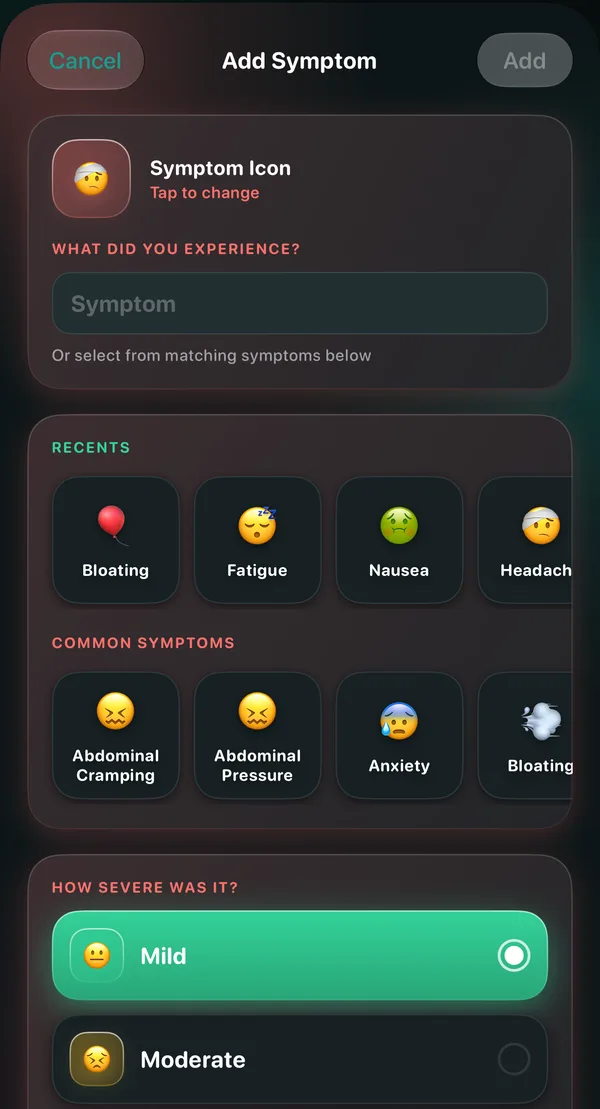
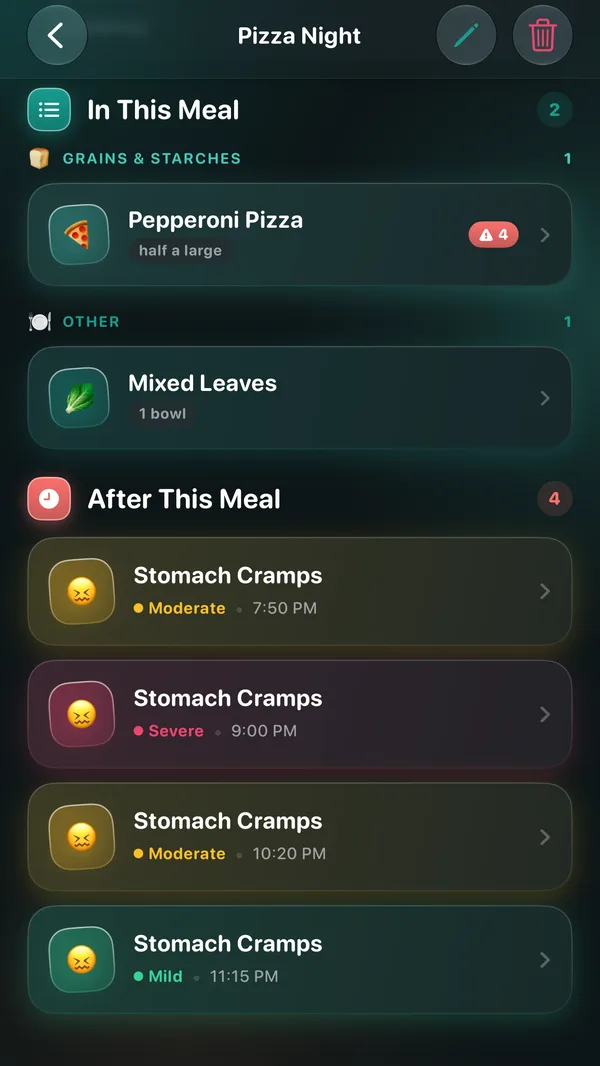
Logging a symptom, and the symptoms that followed a meal.
As your diary grows, Correlations scores each pairing of a food and a symptom, with how often it has happened, how bad it was and the average delay. Each one is labelled by how much evidence there is: Emerging after one to three times, Building from four and Strong from nine. The app tells you how many more logs it needs, and you can tap any pairing to see the meals behind it.
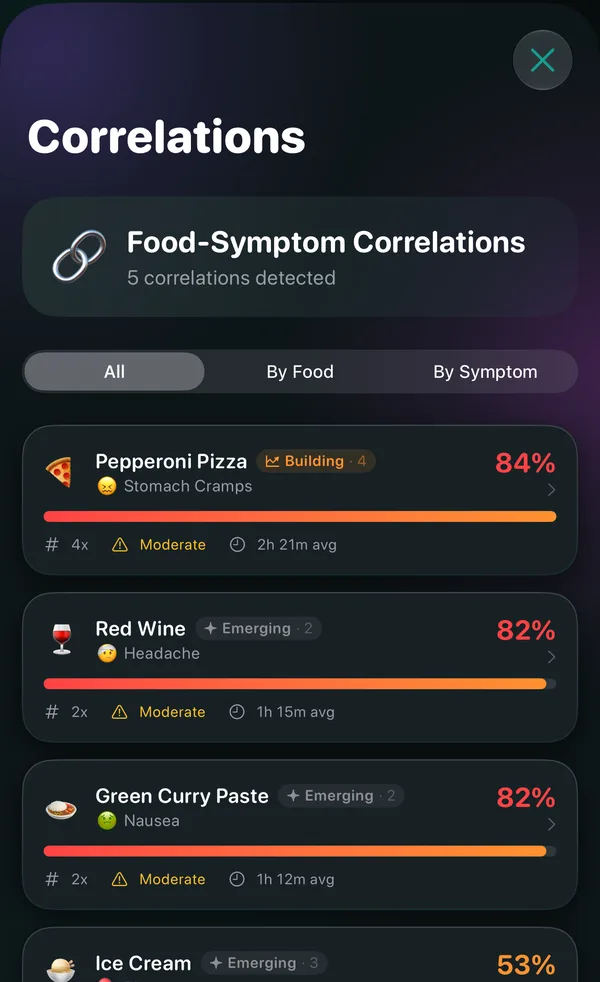
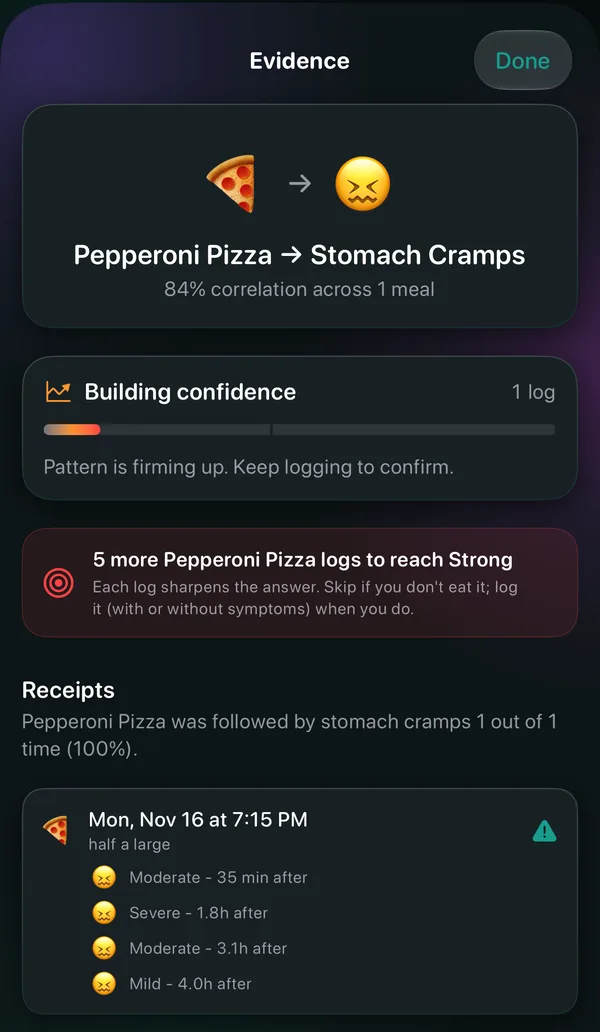
Correlations, and the evidence behind one of them.
If you and your GP or dietitian decide to try an elimination diet, the elimination plan helps you stick to it. Choose the foods to avoid and how long for, from two to four weeks, then bring them back one at a time, three days each, while you keep logging. Before an appointment, create a PDF report of your food timeline and symptoms to share with your GP or dietitian.
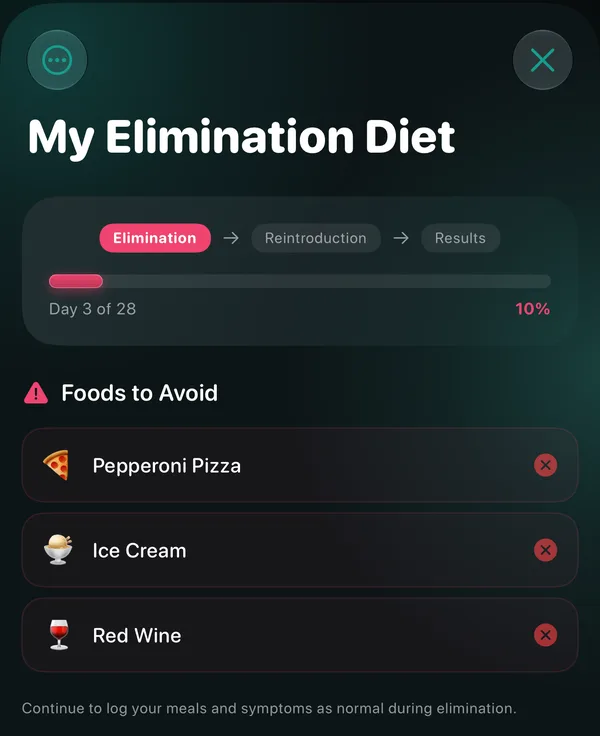
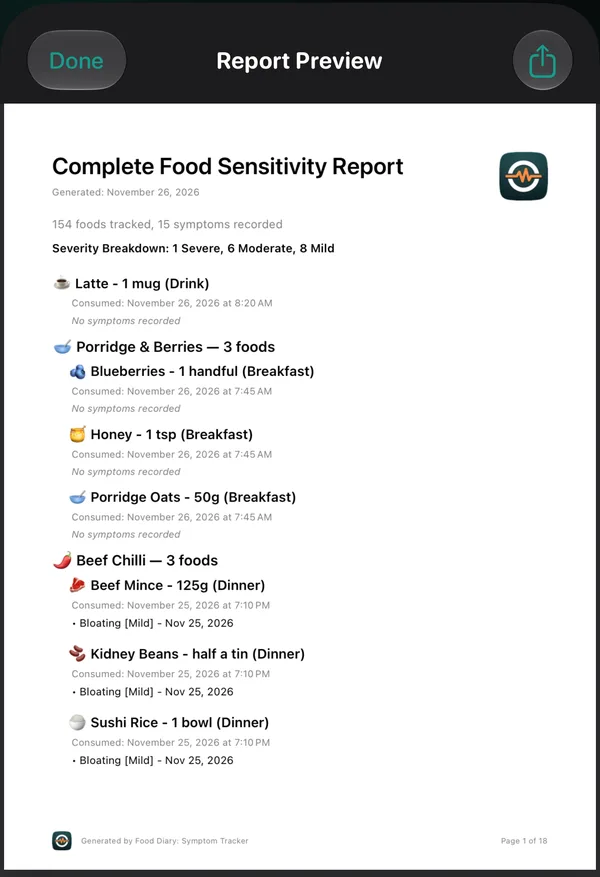
An elimination plan three days in, and the report for your doctor.
Food Diary shows patterns, but it can’t diagnose anything. A strong pattern is something to take to your GP or dietitian, not a reason to cut the food out yourself. Your diary stays on your device and in your own iCloud, with no account.
Food Diary is free to download. Keeping the diary, reports and insights need a subscription or a one-off purchase. If you think stress, sleep or something other than food is behind your symptoms, Symptom Tracker tracks symptoms against those instead.
Common questions
How long should I keep a food and symptom diary?
There’s no set length, but a few days is rarely enough. Plan on a few weeks, including weekends, so the foods you eat now and then turn up more than once, and keep going while you try any changes.
How long after eating do food intolerance symptoms start?
Usually a few hours after eating, according to the NHS, and they can last for a few hours or days. Lactose intolerance symptoms can start within minutes. Allergy symptoms can start straight after eating or days later.
Can a food diary tell me if I have a food allergy?
No. It can help your GP, but food allergies are diagnosed with tests such as skin-prick and blood tests, usually by a specialist.
Should I write down drinks?
Yes, all of them. The NHS lists alcohol and caffeine among the things that can set off IBS, and the British Dietetic Association’s IBS advice includes cutting down on alcohol, caffeine and fizzy drinks.
Do I need to count calories?
No. To find a trigger, what matters is what you ate, how much and how you felt afterwards. Food Diary doesn’t count calories at all.
Is there a free food and symptom diary template?
The template above works on paper or in a spreadsheet. Your GP or dietitian may also give you their own to fill in before an appointment.
The short version
Write down everything you eat and drink, how much and when, and any symptoms, with how bad they were and when they started. Keep it up for a few weeks, look for repeats rather than one-offs, and take it to your GP or dietitian before you cut anything out. Food Diary keeps it all on your iPhone, with a report ready for your appointment.